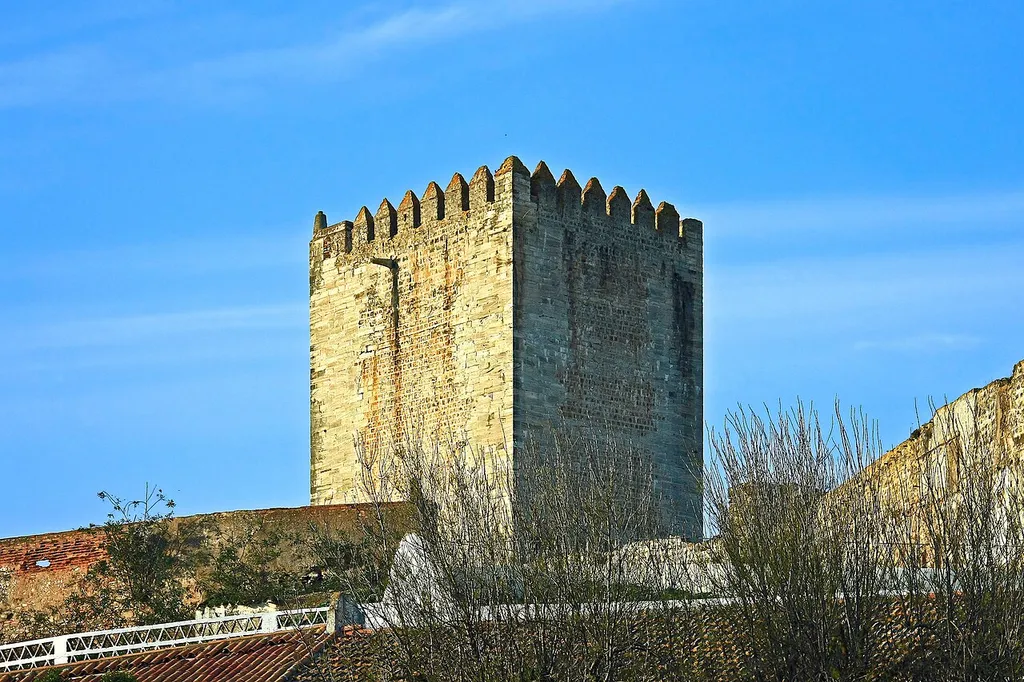
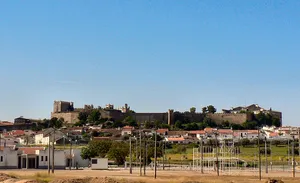
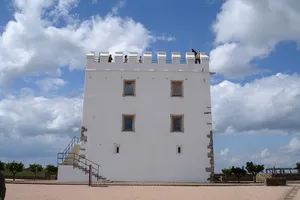
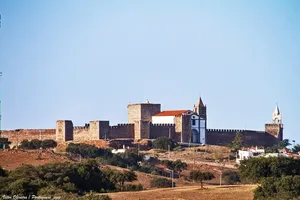
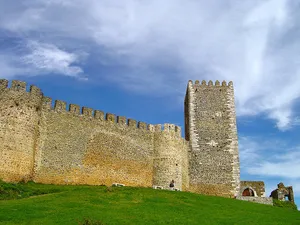
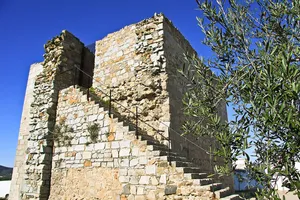
Dominando a cidade com o que resta das suas torres e muralhas, o castelo de Moura foi construído pelos portugueses no início do séc. XIV aproveitando as fortificações deixadas pelos árabes. Na segunda metade deste século foi-lhe acrescentada uma segunda cerca muralhada para abrigar a população que aumentava. No séc. XVI, D. Manuel I encarregou o arquitecto Francisco de Arruda de proceder a algumas alterações, em que se incluem provavelmente a torre do relógio, datando também desta época o convento feminino de S. Domingos, que se encontra no interior da cerca, mandado erguer por D. Ângela de Moura, em 1562, sobre as fundações da antiga mesquita. A igreja conventual guarda o túmulo manuelino dos irmãos Pedro e Álvaro Rodrigues, presumíveis conquistadores de Moura. Durante as Guerras da Restauração, na segunda metade do séc. XVII, a fortaleza medieval foi reforçada com uma linha de baluartes e revelins, segundo o projecto de Nicolau de Langres, adaptada às novas técnicas de guerra com armas de fogo. Do conjunto fortificado destacam-se a torre de menagem rectangular e uma torre circular sobre a qual se acrescentou um relógio no séc. XIX. <a href="http://www.visitportugal.com/NR/exeres/91EAFB7A-5E0E-4276-BD24-976024EAE784,frameless.htm" rel="nofollow">www.visitportugal.com/NR/exeres/91EAFB7A-5E0E-4276-BD24-9...</a> Dominating the town with what remains of its towers and walls, Moura castle was built by the Portuguese at the beginning of the 14th century, taking advantage of the fortifications left behind by the Arabs. In the second half of this same century, a second walled enclosure was added to provide shelter for the growing population. In the 16th century, D. Manuel I commissioned Francisco de Arruda to make some alterations, which probably included the clock tower. Also dating from this time was the convent of São Domingos, built within the walled enclosure at the orders of D. Ângela de Moura, in 1562, upon the foundations of the former mosque. The conve
Author: Vitor Oliveira from Torres Vedras, PORTUGAL, License: CC BY-SA 2.0
·
Fuente
La registración actualmente solo es posible con un código de invitación. Por favor, ingrese su código de invitación o use su enlace de invitación personal.
 alpha
NOW FEDERATED!