Bisotun
Author: –, License: Description is available under license CC-BY-SA IGO 3.0
Description is available under license CC-BY-SA IGO 3.0
source: UNESCO/CPE
Description is available under license CC-BY-SA IGO 3.0
source: UNESCO/CPE
Description is available under license CC-BY-SA IGO 3.0
source: UNESCO/CPE
Description is available under license CC-BY-SA IGO 3.0
source: UNESCO/CPE
Description is available under license CC-BY-SA IGO 3.0
source: NFUAJ
Source: unesco.nl
· Quelle
Über diesen Ort
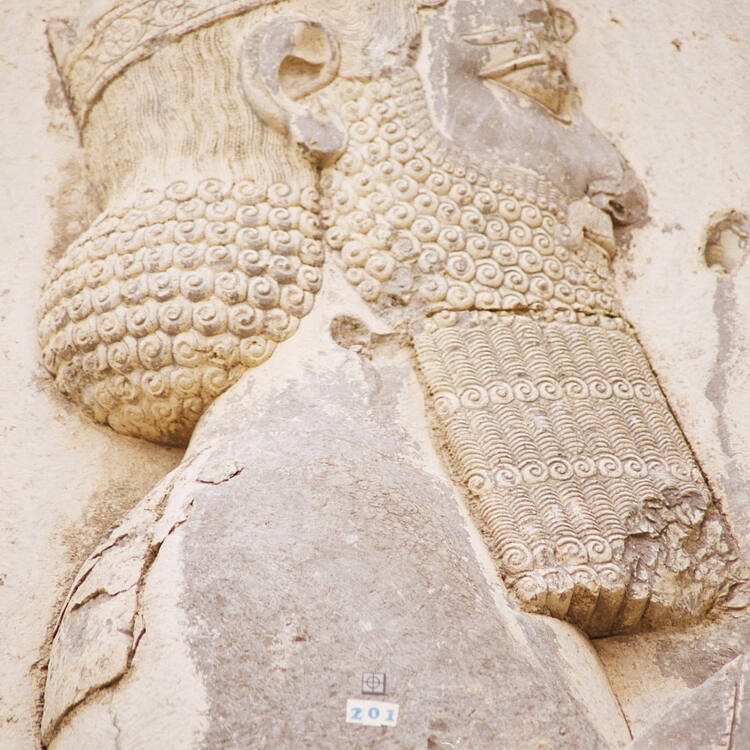
Bisotun is located along the ancient trade route linking the Iranian high plateau with Mesopotamia and features remains from the prehistoric times to the Median, Achaemenid, Sassanian, and Ilkhanid periods. The principal monument of this archaeological site is the bas-relief and cuneiform inscription ordered by Darius I, The Great, when he rose to the throne of the Persian Empire, 521 BC. The bas-relief portrays Darius holding a bow, as a sign of sovereignty, and treading on the chest of a figure who lies on his back before him. According to legend, the figure represents Gaumata, the Median Magus and pretender to the throne whose assassination led to Darius’s rise to power. Below and around the bas-reliefs, there are ca. 1,200 lines of inscriptions telling the story of the battles Darius waged in 521-520 BC against the governors who attempted to take apart the Empire founded by Cyrus. The inscription is written in three languages. The oldest is an Elamite text referring to legends describing the king and the rebellions. This is followed by a Babylonian version of similar legends. The last phase of the inscription is particularly important, as it is here that Darius introduced for the first time the Old Persian version of his res gestae (things done). This is the only known monumental text of the Achaemenids to document the re-establishment of the Empire by Darius I. It also bears witness to the interchange of influences in the development of monumental art and writing in the region of the Persian Empire. There are also remains from the Median period (8th to 7th centuries B.C.) as well as from the Achaemenid (6th to 4th centuries B.C.) and post-Achaemenid periods.
Further reading
Source and License: Description is available under license CC-BY-SA IGO 3.0
Description is available under license CC-BY-SA IGO 3.0
source: UNESCO/CPE
Description is available under license CC-BY-SA IGO 3.0
source: UNESCO/CPE
Description is available under license CC-BY-SA IGO 3.0
source: UNESCO/CPE
Description is available under license CC-BY-SA IGO 3.0
source: UNESCO/CPE
Description is available under license CC-BY-SA IGO 3.0
source: NFUAJ
Source: unesco.nl ·
Diskussion
Noch keine Beiträge oder Kommentare zu diesem Ort.
Please log in to submit a comment.
Weitere Artikel folgen beim Scrollen
↓
Related Articles
Kermanshah
city in Kermanshah province, Iran...
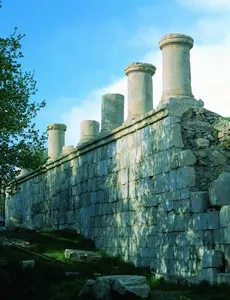
Temple of Anahita at Kangavar
temple attributed to Anahita...
❮
❯
1 / 2
Hallstatt-Dachstein / Salzkammergut Cultural Landscape
The Hallstatt-Dachstein/Salzkammergut region is a breathtaking alpine landscape in Austria,...
Yellowstone National Park
The vast natural forest of Yellowstone National Park covers nearly...
Saint Hilarion Monastery/ Tell Umm Amer
Situated on the coastal dunes in Nuseirat Municipality, the ruins...
The Emergence of Modern Human Behaviour: The Pleistocene Occupation Sites of South Africa
This serial property contributes to the understanding of the origin...
The Flow Country
The serial property, located in the Highland Region of Scotland,...
Umm Al-Jimāl
The property is a rural settlement in northern Jordan that...
The Historic Town and Archaeological Site of Gedi
Surrounded by a remnant coastal forest, away from the coastline,...
Frontiers of the Roman Empire – Dacia
From 500 BCE on, the Roman Empire extended its territory...
Hegmataneh
The archaeological remains of ancient Hegmataneh are located in northwestern...
Beijing Central Axis: A Building Ensemble Exhibiting the Ideal Order of the Chinese Capital
Running north to south through the heart of historical Beijing,...
 alpha
NOW FEDERATED!
alpha
NOW FEDERATED!